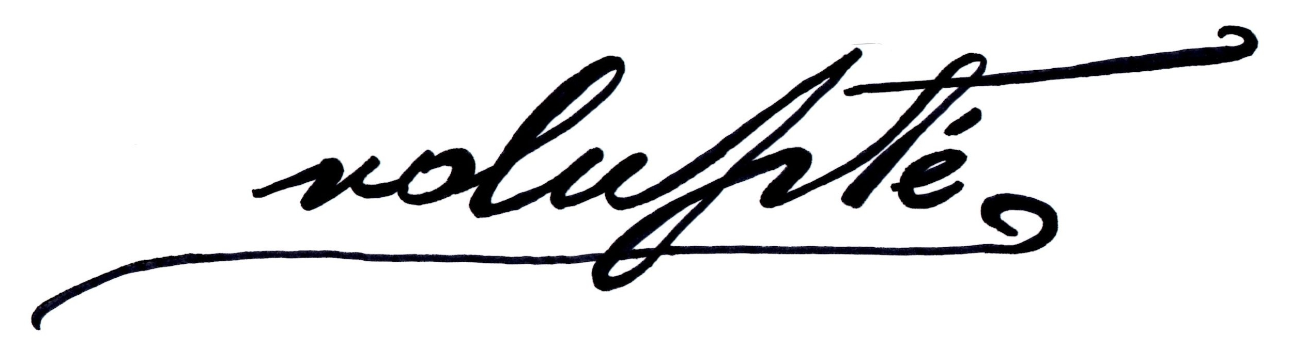
Aubrey Beardsley’s The Story of Venus and Tannhäuser as a Decadent Fairy Tale
Abstract
In the latter decades of the nineteenth century, fairy tales were in vogue. The painter John Anster Fitzgerald saw his piece The Fairy’s Lake shown at the Royal Academy of Arts in 1866, and contributed various works to the Christmas editions of The Illustrated London News; for the stage, James Robinson Planché adapted the fairy tales of Madame D’Aulnoy to great success, and, by the 1890s, Andrew Lang’s ‘coloured’ Fairy Books were a staple of the middle-class nursery. [i] Perhaps inevitably, however, much discussion ensued as to what the fairy tale should do or be, and what they might inculcate in the child reader.
[i] See John Anster Fitzgerald, The Fairy’s Lake, oil on board, exhibited 1866, Tate, London; Marie-Catherine d’Aulnoy and James Robinson Planché, Fairy Tales / by the Countess D’Aulnoy; Translated by J. R. Planché (George Routledge and Sons, 1855; reissued 1888); and Lang’s series of ‘coloured’ fairy tales, starting with The Blue Fairy Book (1888), which were originally published by Longmans, Green & Co.